Meet Gryphon, Our African Grey Quality Control Manager
Gryphon is my Congo African Grey, and he shares our Phoenix home with the rest of the flock. He's also the unofficial face of Elie's Bird Sitting — and the daily reminder of why I built an in-home bird sitting service in Phoenix around one idea: every parrot is an individual, and good care starts with understanding how that individual thinks.
Most people believe parrots just repeat words. Anyone who's lived with one knows better. This is the story of how Gryphon appointed himself head of quality control in our house.
The Seed Dish Incident: How Gryphon Requests a Refill
Gryphon has a dish of hemp seeds clipped to the side of his cage, and like any seed dish, it slowly fills with empty hulls as he works through it. Glance at it and you'd swear it was still full. Gryphon is not fooled.
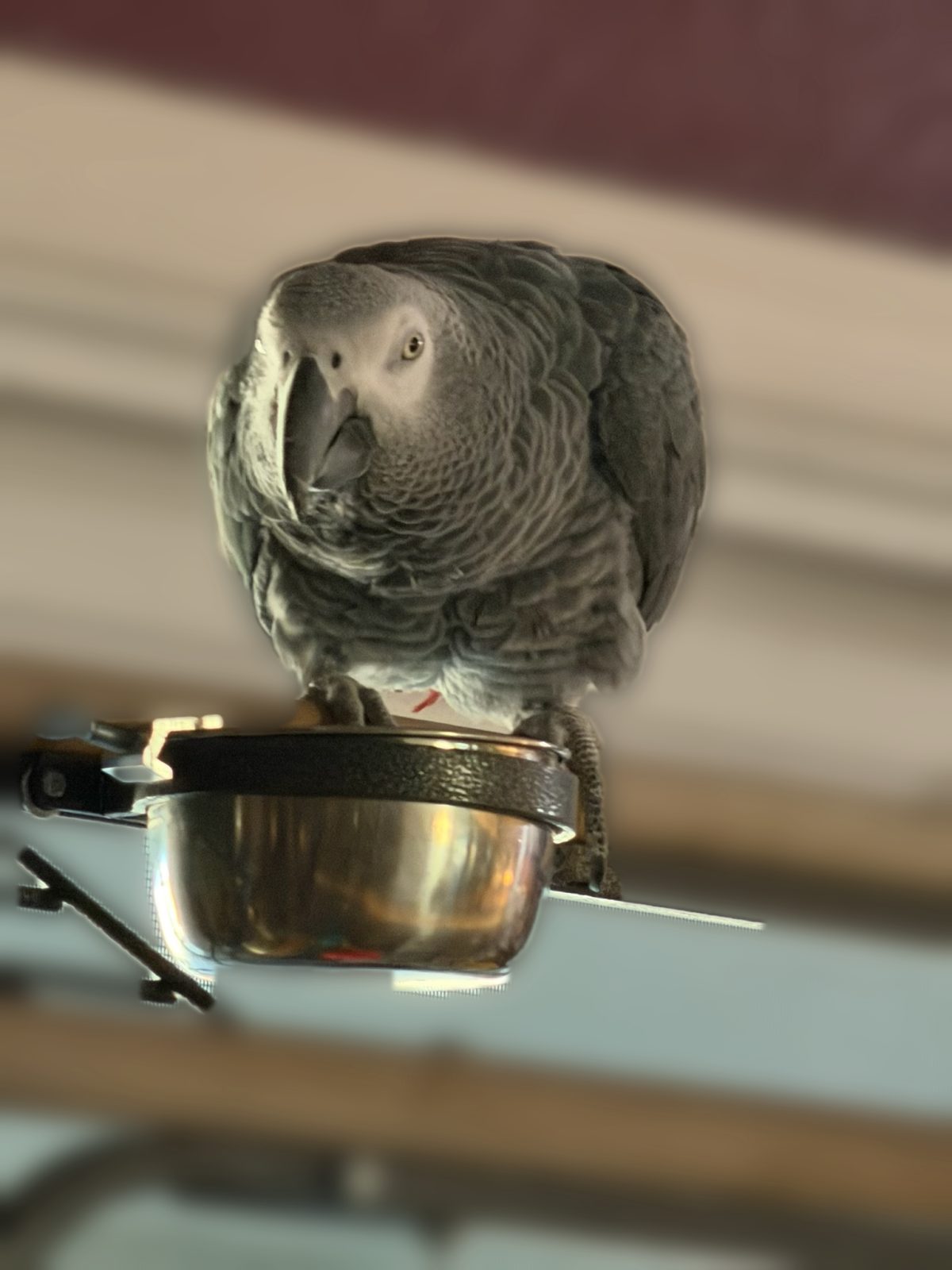
Somewhere along the way he decided there's an acceptable ratio of seeds to hulls, and once the dish drops below it, he takes action. He doesn't yell about it. He doesn't rattle the bars. He works the lock off the dish — a lock that exists specifically because of him — and pitches the whole container across the room. Hemp hulls everywhere.
The first time, I figured it was an accident. The second time, I raised an eyebrow. By the third, I had to admit Gryphon had invented his own maintenance request system — and honestly, it works. The dish hits the floor, a human shows up within minutes, the mess gets cleaned, and the dish comes back full of fresh seed. From where Gryphon sits, the process is flawless. Why would he ever change it?
What Gryphon Teaches Us About African Grey Intelligence
Gryphon's system isn't a fluke — it's exactly what decades of research on African Grey intelligence would predict. Dr. Irene Pepperberg's famous research parrot Alex learned to label dozens of objects, colors, and quantities, and her current Grey, Griffin, has outperformed young children on tests of memory and reasoning. These birds don't memorize tricks; they understand how things work.
That's what I see in Gryphon's dish-launching. He worked out a chain of cause and effect — dish on floor brings human, human brings fresh seed — and turned it into a reliable procedure. He doesn't just react to his world. He runs experiments on it.
Parrots don't just react to their world. They figure out how it works, then start running experiments on it.
Why Smart Parrots Need In-Home Bird Sitting in Phoenix
That intelligence is exactly why parrots do poorly with one-size-fits-all care. A bird this observant notices everything: a strange room, a different routine, an unfamiliar voice. Boarding piles all of those changes on at once. In-home bird sitting keeps a parrot in its own territory, with its own cage, diet, and schedule — and lets the sitter learn its normal, so anything unusual stands out.
Reading a parrot also means watching the small signals: feather position, eye pinning, changes in vocalization, appetite, and posture. Those cues tell you whether a bird is relaxed, overstimulated, or stressed long before anything obvious goes wrong. A professional bird sitter for African Greys and other parrots needs to speak that language.
How We Tailor Bird Sitting to Each Parrot's Personality
Every bird I care for starts with a detailed profile. Before the first visit, owners tell us about their bird's quirks in our intake form — diet, routines, favorite phrases, vet contacts, and the behaviors that make their bird who it is. If your conure throws her dish like Gryphon does, I want to know that on day one, because to me that's not misbehavior. That's communication.
During every visit I keep notes and send daily photo updates, so you can see for yourself that your bird is eating, playing, and acting like itself. The goal is simple: your bird barely notices you're gone, and you never have to wonder.
Questions About Bird Sitting in Phoenix? Ask Gryphon's Department
How smart are African Grey parrots?
African Greys are considered among the most intelligent birds in the world. Research parrots have demonstrated the ability to label objects, understand concepts like color and quantity, and solve problems at a level comparable to young children. In daily life, that intelligence shows up as learned routines, cause-and-effect experiments, and inventive ways of communicating — like Gryphon's seed-dish maintenance requests.
Why choose in-home bird sitting instead of boarding in Phoenix?
Parrots are sensitive to changes in environment, and boarding means unfamiliar sights, sounds, and routines all at once. In-home bird sitting keeps your bird in its own space with its own cage, diet, and schedule, which dramatically reduces stress. It also lets the sitter observe your bird's normal behavior, so anything unusual stands out immediately.
Can you care for birds with special behavior quirks?
Yes — quirks are the rule with parrots, not the exception. Our intake process documents each bird's routines, preferences, and signature behaviors before the first visit, so nothing comes as a surprise. A bird that throws its dish, guards a favorite perch, or only steps up for a particular phrase gets care built around exactly that.